
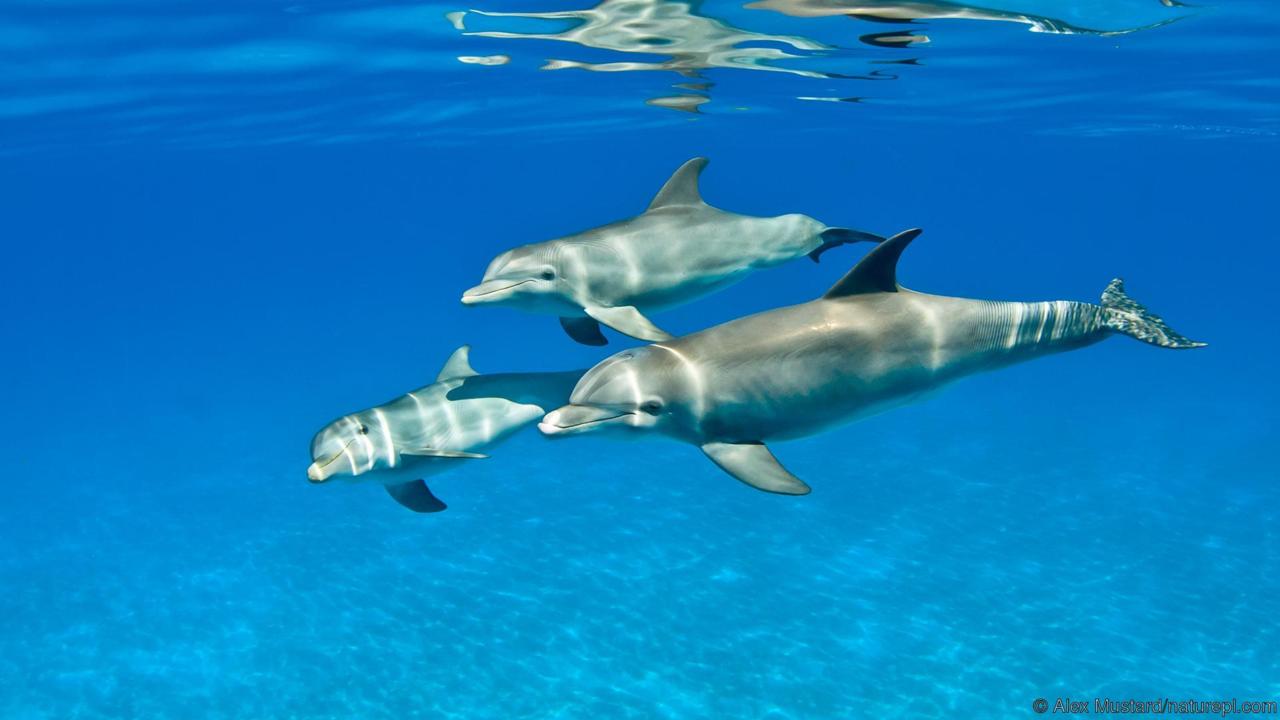
Dolphins are remarkable animals. They live in highly complex societies, have developed an incredible communication system and the ability to use sonar. It is often thought that dolphins are always happy as they appear to have an impenetrable smile on their face. However, all is not well in the dolphin world. They are in fact some of the most vulnerable marine species in the world. Dolphins and their environment are under threat from many human sources.
It is now a crucial time; we must protect and conserve dolphins and their environment to ensure their survival into the future.
There remain many mysteries to the world of the dolphin and their needs for survival. To uncover some of these mysteries and ensure that dolphins have what they need to survive is through undertaking research, education and collaboration.
It is up to each of us to help protect and conserve dolphins and their environment.
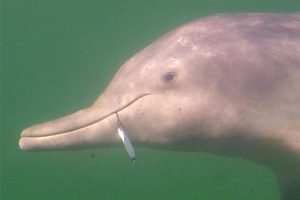
“A dolphin tangled in fishing line sought help from a diver in the waters of Hawaii.
The amazing encounter on January 11 2013 was captured on video and the diver, Keller Laros, spent the better part of eight minutes tending to the needy mammal who readily accepted the help.
Mr Laros was leading a group of snorkelers for a manta ray dive experience off the Big Island’s Kona International Airport when the dolphin squealed out.
The diver explained, ‘The way he came right up and pushed himself into me there was no question this dolphin was there for help.’”
This encounter is an amazing account of dolphins seeking assistance from people. The divers did an amazing job untangling the line from the dolphin. This highlights the threat of fishing practices to wildlife – without the help of these divers, the fate of this dolphin would not have been good.
This rescue was performed by experienced divers and it is not recommended that inexperienced or unqualified persons attempt such rescues.
If you see injured, stranded or entangled marine wildlife in Australia please contact your local National Parks & Wildlife Service. For whales and dolphins you can also contact us at info@dolphinresearchaustralia.com for assistance.
Read more: http://www.dailymail.co.uk/news/article-2266794/Stricken-dolphin-asked-Hawaii-diver-help-Moment-mammal-stuck-fishing-line-pushed-scuba-instructor-waited-patiently-freed.html#ixzz2J8BQuQt2
Source: Daily Mail http://www.dailymail.co.uk
-January 2013-
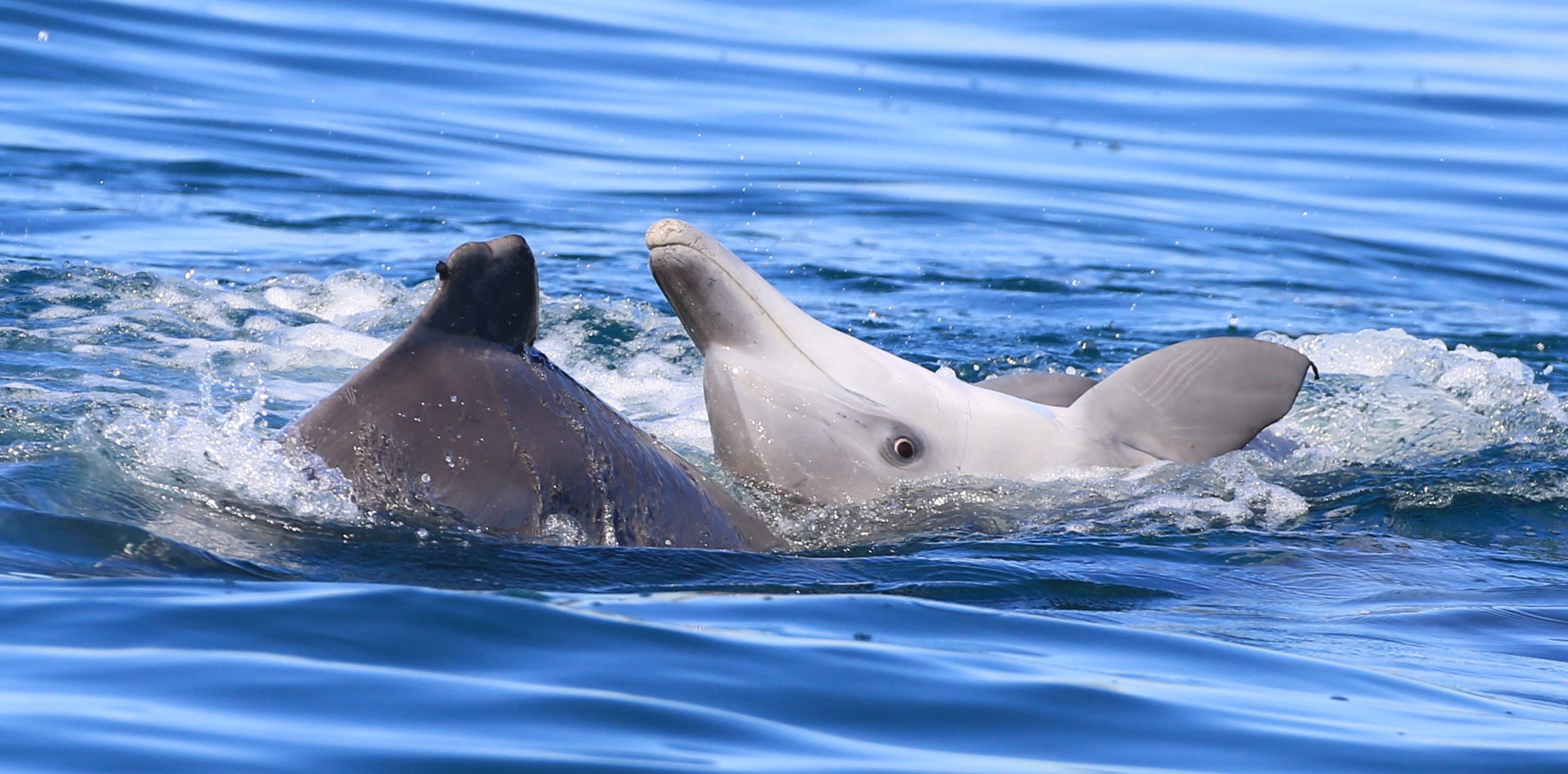
Boaters and swimmers are being reminded to give dolphins space as the summer calving period begins. Although calving can occur all year round, Dr. Liz Hawkins from Dolphin Research Australia says this time of year we see a peak in the number of new calves born in and around Byron Bay, New South Wales. Mothers and calves are highly vulnerable to human disturbance and can experience high levels of stress from such encounters.
Boaters (which include kayakers and surfers) are reminded to stick to the Australia dolphin watching regulations; no approach distance = 50m for vessels (non calf groups), 150m (for calf groups).
-December 2012-
Researchers in the US have recently reported in Current Biology findings from a study showing the apparent mimicry of a Beluga whale mimicking human voice. Although it has been known that cetaceans can mimic sounds, this is the first to show that Beluga’s (Delphinapterus leucas) can spontaneously imitate human speech. Curiosity of researchers were raised when a diver in NOC, Beluga’s tank at the U.S. Navy Marine Mammal Program facility in San Diego, thought he heard someone calling him. After investigating the calls, it was not a human at all, but NOC vocalising sounds lower in frequency than ‘normal’ beluga calls and resembled the inflections of human speech. Sam Ridgway, lead researcher from the National Marine Mammal Foundation said “Our observations suggest that the whale had to modify its vocal mechanics in order to make the speech-like sounds.”
-October 2012-